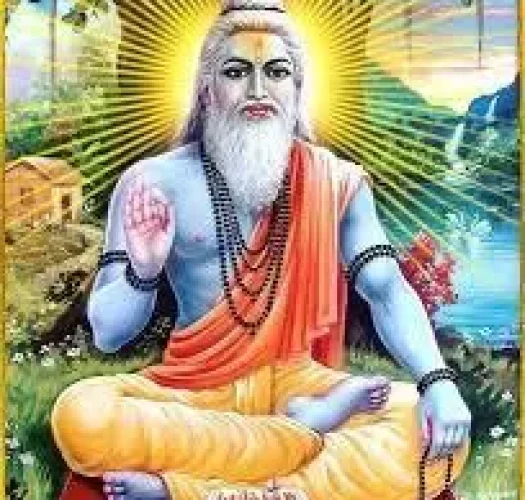
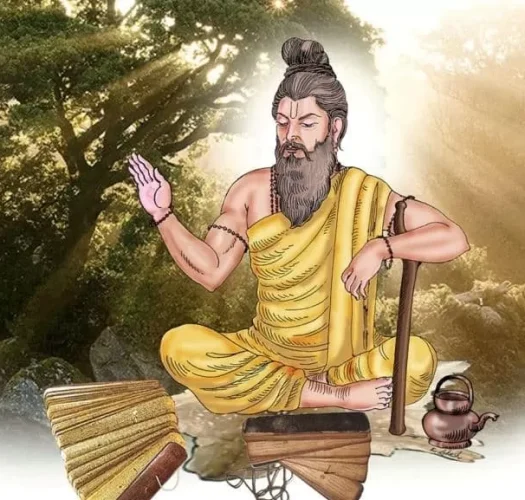
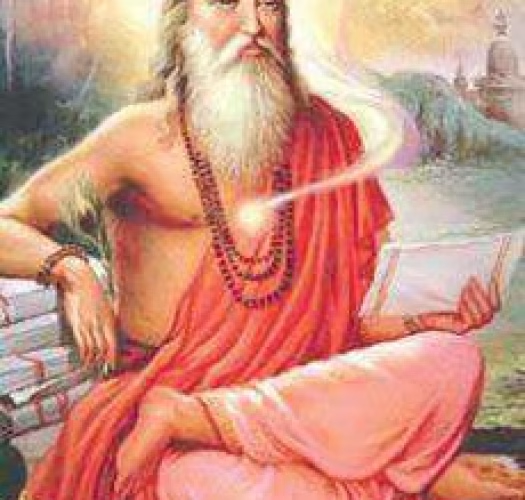
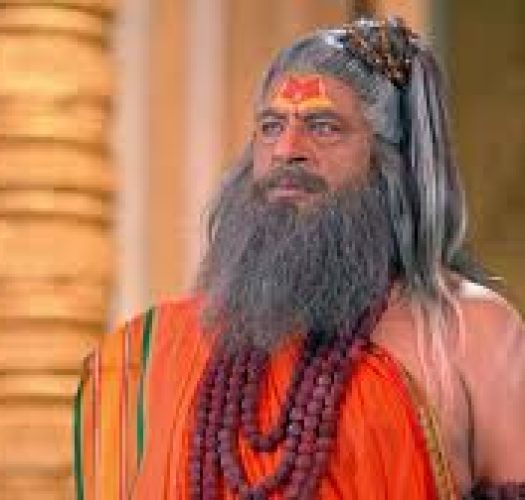
Atri is one of the seven great Rishis or Saptarshi along with Marichi, Angiras, Pulaha, Kratu, Pulastya and Vashistha.[1] According to the legends of the Vedic era, sage Atri was married to Anasuya Devi. They had three sons, Dattatreya, Durvasa and Chandra.[5] As per divine account, he is the last among the seven Saptarishis and is believed to have originated from the tongue. The wife of Atri was Anasuya, who is considered one of the seven female pativratas. When instructed by divine voice to do tapas, Atri readily agreed and did severe tapas. Pleased by his devotion and prayers, the Hindu trinity, namely, Brahma, Vishnu, and Shiva appeared before him and offered him boons. He sought all the three to be born to him. Another version of the legend states that Anasuya, by the powers of her chastity, rescued the three gods and in return, they were born as children to her.
Sage Gautam is considered one of the greatest of the Saptarshis. He was Rahugana’s son. He married Ahalya and had two sons, Vamadeva and Nodhas, who discovered mantras. Sage Gautam is mentioned in the Ramayana (Treta Yuga) and Mahabharatha (Dwapara Yuga), as he lived throughout these periods.
This most holy place now houses a beautiful temple dedicated to Rishi Gautam, his wife Ahilya, his son Satanand Ji, who performed the marriage ceremony of Bhagwan Ram and Devi Sita in Janakpur, his daughter Devi Anjani, the mother of Bajrangbali, and, most importantly, the immortal pious imprints of Bhagwan Ram.
विश्वामित्र) is one of the most respected rishis (sages) in ancient India. Vishvamitra is one of the seven brahmarshis. According to Hindu tradition, he composed the vast part of the Rigveda’s Mandala 3, including the Gayatri Mantra (3.62.10). According to the Puranas, only 24 rishis since antiquity have understood the complete meaning of the Gayatri Mantra and so wielded its full power. Vishvamitra is considered to have been the first, while Yajnavalkya was the last.
Textual backdrop.
Viśvāmitra Gāthina was a Rigvedic rishi and the primary author of Mandala 3 of the Rigveda.[3] Jamadagni Bhārgava instructed Viśvāmitra.[4] He was the purohita of the Bharata tribal king Sudās, but was succeeded by Vasiṣṭha.[5] He helped the Bharatas to cross the Vipāśa and Śutudrī rivers.(Modern Beas and Sutlej).[6] According to experts.
Shiva and Shakti are key concepts in Hindu cosmology and philosophy, representing the dynamic interaction of male and female forces, consciousness and energy, or the static and dynamic aspects of reality. Here are some vital data about Shiva and Shakti. Shiva Shakti represents the Godhead, with Shiva as the passive, transcendent, eternal essence and Shakti, the Divine Mother, as the active, immanent, and temporal principle. The name Shiv Shakti is derived from the names of the Hindu deity Shiva, who is often associated with the Moon, and Shakti, the heavenly feminine spirit who is often depicted as Shiva’s wife.